
History
Ten years of the same idea
It went from tidying up our own scattered playbooks to building whole platforms. What it is for never changed: describe the thing once, render it correctly everywhere, own the result.
-
2016
A rewrite, not a new idea
Started by The Network Factory, the infrastructure company that became part of AxisOps: every Ansible role and playbook we had scattered across projects, pulled into one project called “systems2”. That is what happens when you let the engineers do the marketing.
The point was to unify our own infrastructure and abstract away the cloud underneath it. Azure, AWS or on-prem, clients got the same tooling, the same deployments, the same reliability. Zero lock-in — that was the point then, and it still is.
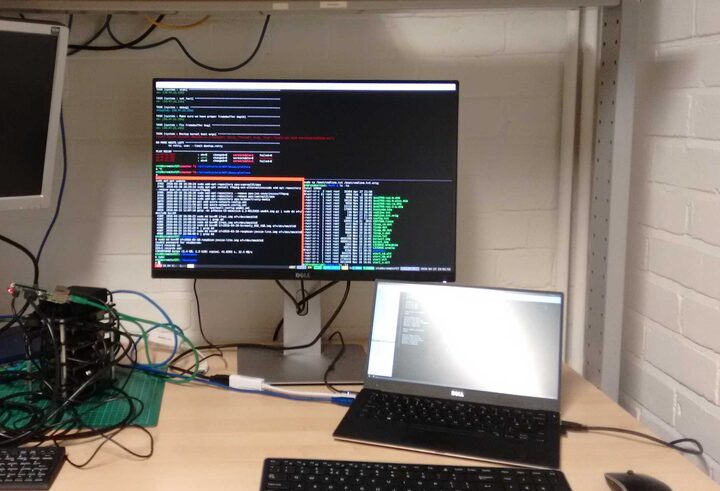
April 2016. A play recap, and the cluster it was aimed at. -
2018
Everything builds from stemcells
Our base images — VM and container both — are built by the playbook instead of assembled by hand. One provenance for every machine we ship, patched in one place.
That is still how it works. 6 stemcell images today — PHP, Python and Node.js families — and an application picks what it is with one variable naming its role, not a Dockerfile of its own.
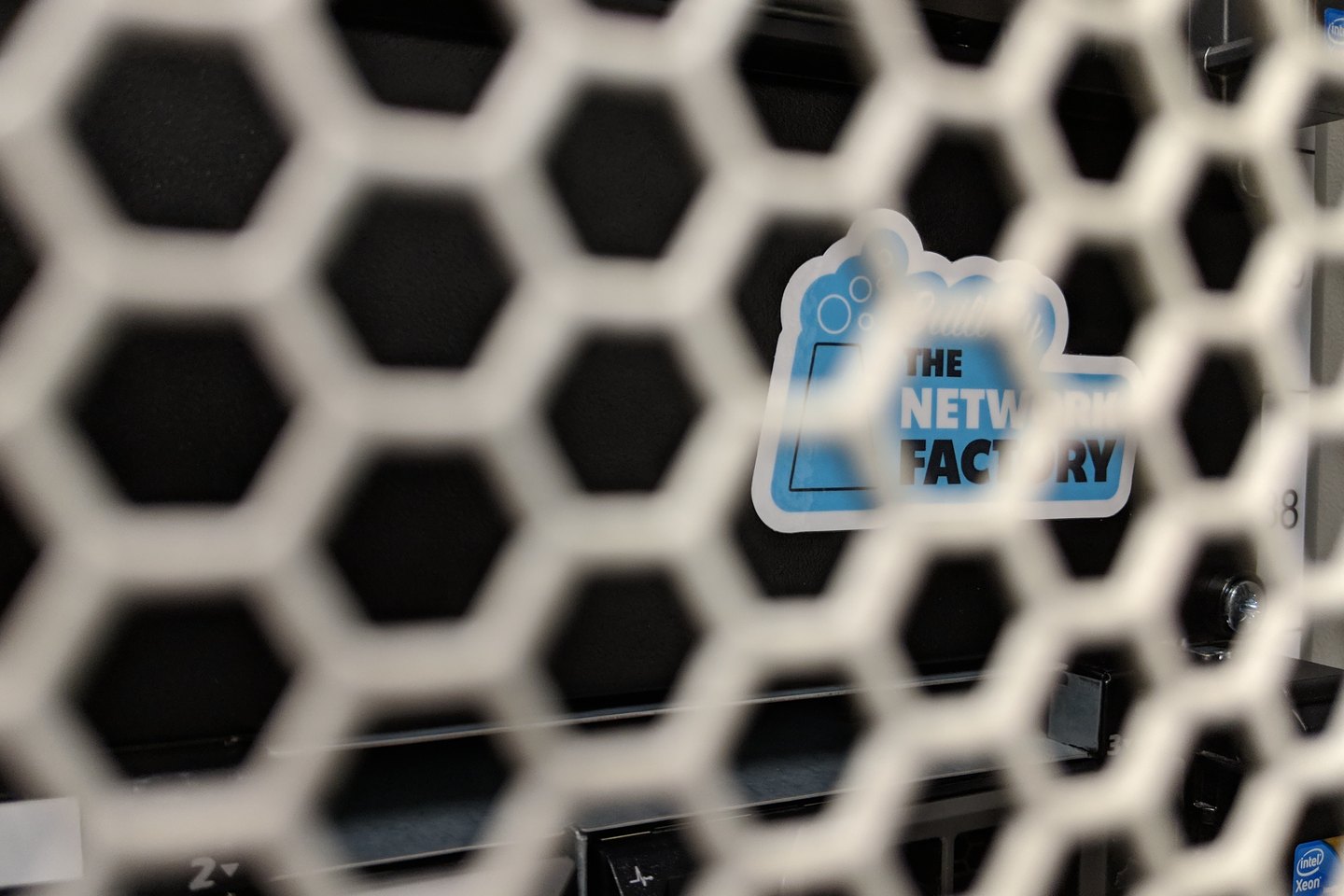
2018. The build server the images came off. -
2019
Observability, rendered in
Full-stack monitoring and tracing, built in-house — and wired in by the same templates that built the stack. Every request traced, every metric captured, every alert meaningful, without anyone bolting it on afterwards.
In the current engine the monitoring config was there from its first week; by 2025 the whole suite — metrics, alerting, dashboards, logs and traces — rendered from one set of templates.
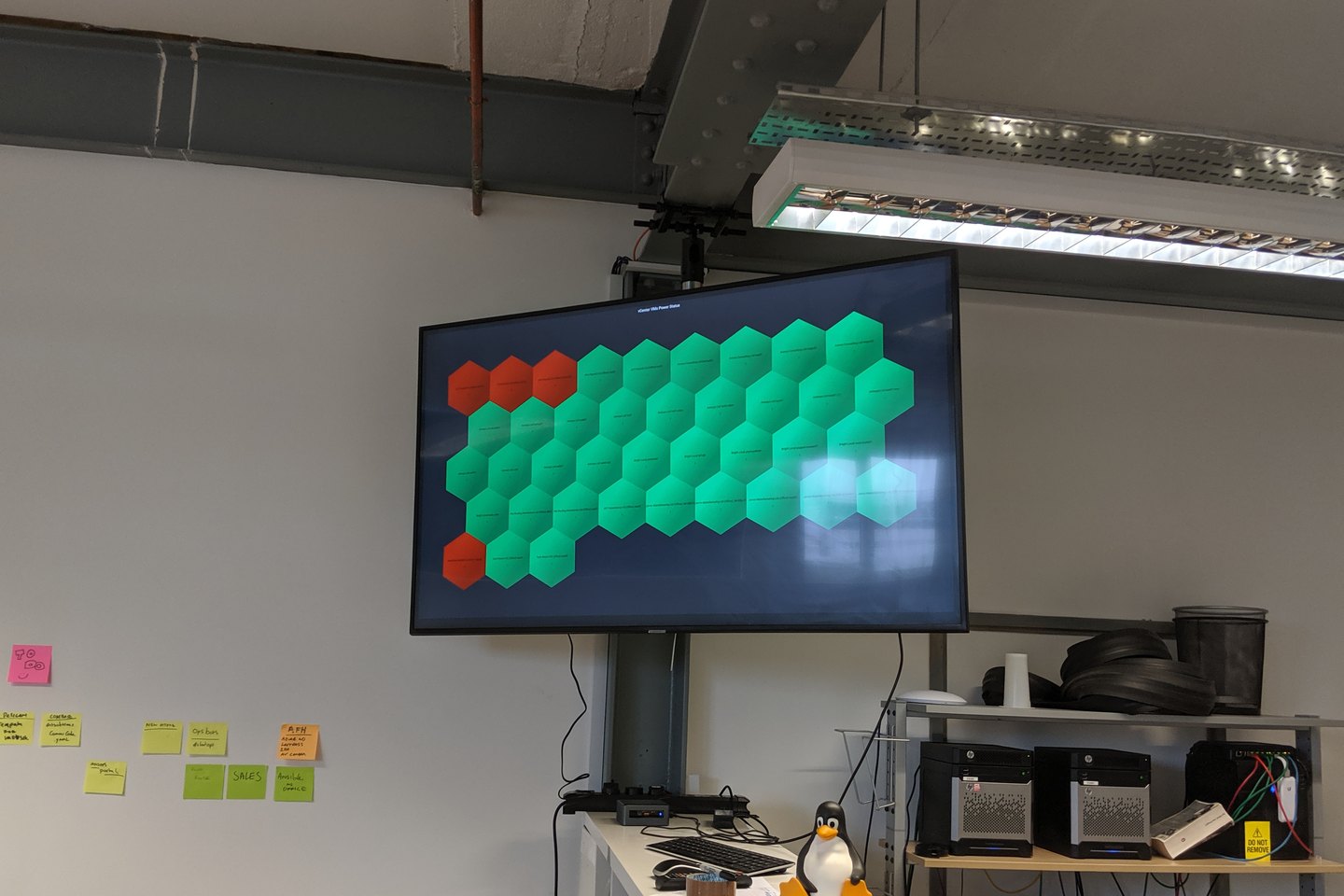
2019. The status wall, green means running. -
2022
It started building the apps too
It started building the client applications as well as the servers they run on. Compose files, Traefik, TLS — and every front end we ship, built from one source of truth per environment instead of assembled per project.
The engine that runs today was born that July, application-first: day one, a container for the company’s own Laravel portal; day four, Traefik ingress in front of it; day nine, the templating that has rendered every stack since.
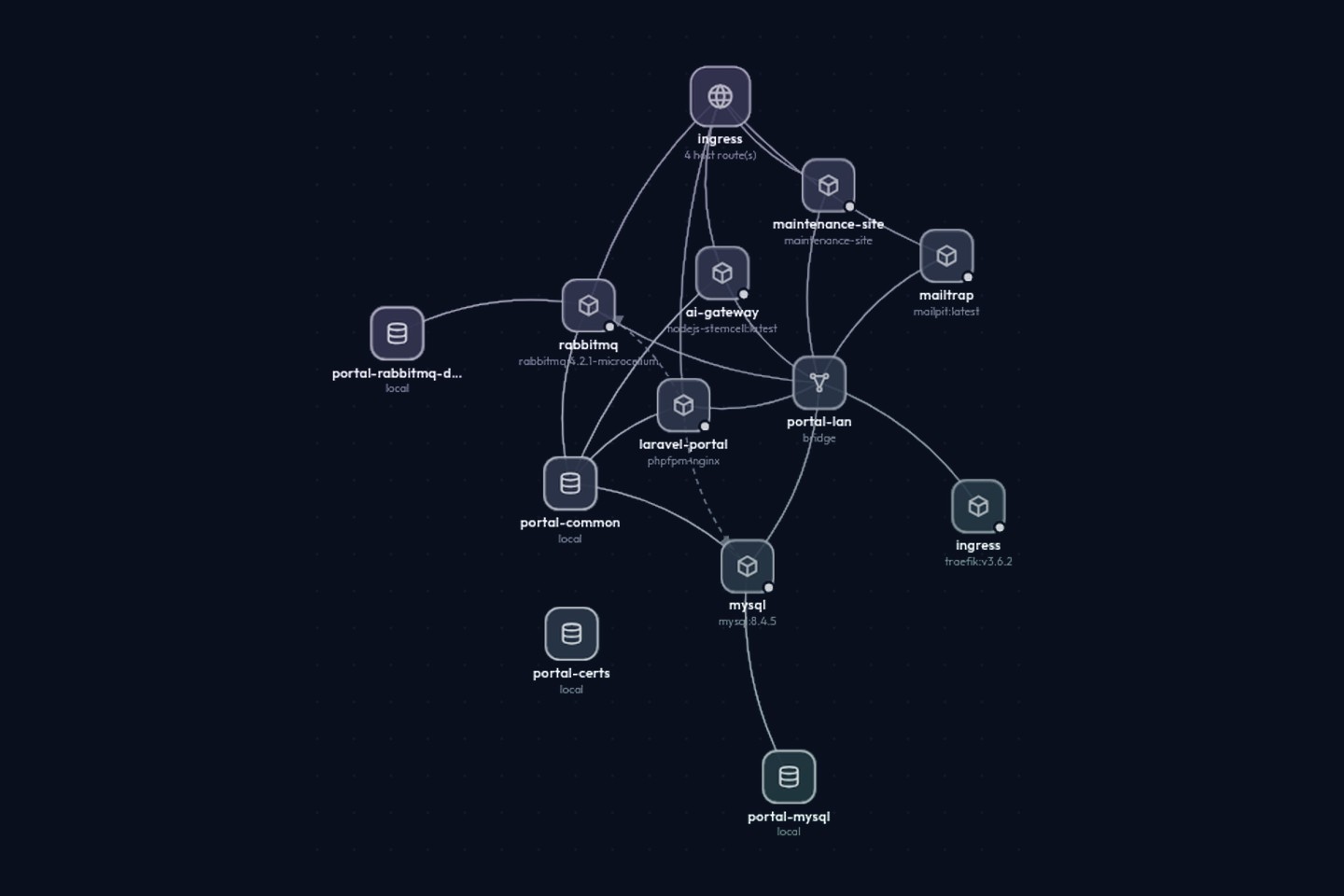
An application stack, as micro-glue renders it: every service, network and volume, drawn. -
2025
One command for all of it
Nearly ten years of internal tooling got a version number and a proper release:
v1.0.0, tagged in November. Three weeks later themgCLI put Ansible, Docker and the VM tooling behind one set of commands, so building a machine and building a stack stopped being separate skills. What had been a directory change, a vault password and a playbook incantation becamemg config generate: a project’s config in, its compose file, every service’s environment and the whole runtime config out.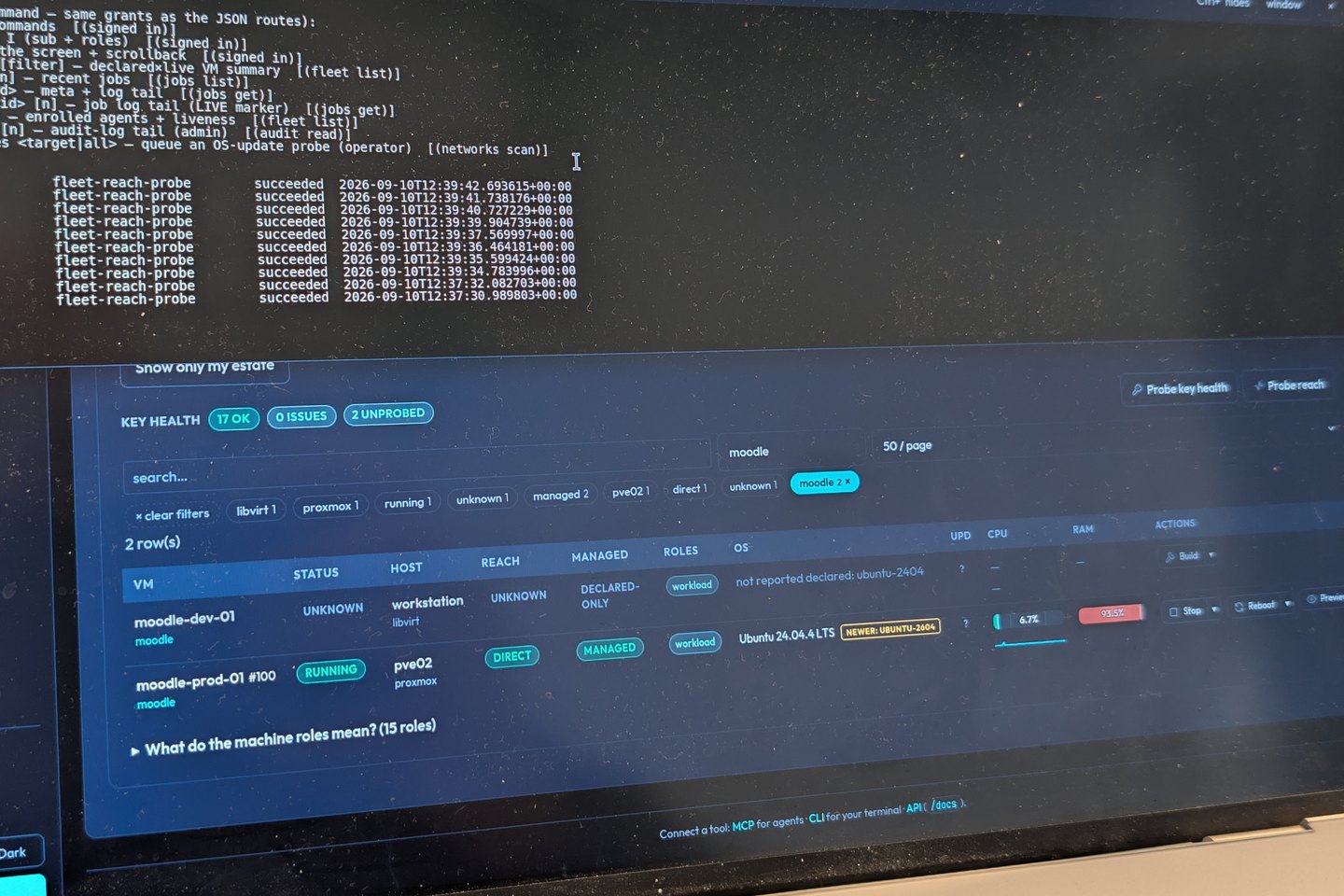
The console, on the laptop it runs from. Photographed 2026. -
2026
The container factory, with a face
Ingress, TLS, databases, messaging, observability, backups — every one of them a template, rendered from environment YAML with no per-service Dockerfiles to write or babysit. Each one carries machine-readable metadata, so Substrate’s control plane can offer them from a catalogue and compile a stack you can see, wire up and drag.
The metadata sidecars and the linter that checks them landed in the same July commit — the schema was born enforced. The August release,
v1.1.0, is named in its own tag message as the sidecar release. 182 public services carry one today, and the catalogue on this site is rendered from them.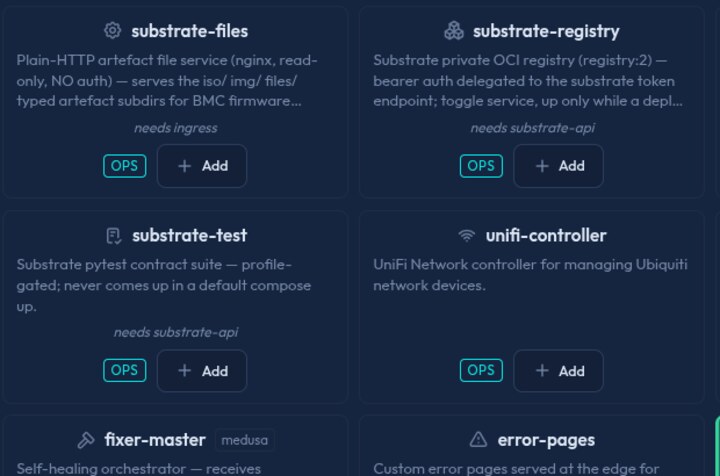
2026. The templates, offered as a catalogue you add from.
Now
Maintained by the Microcelium team at AxisOps
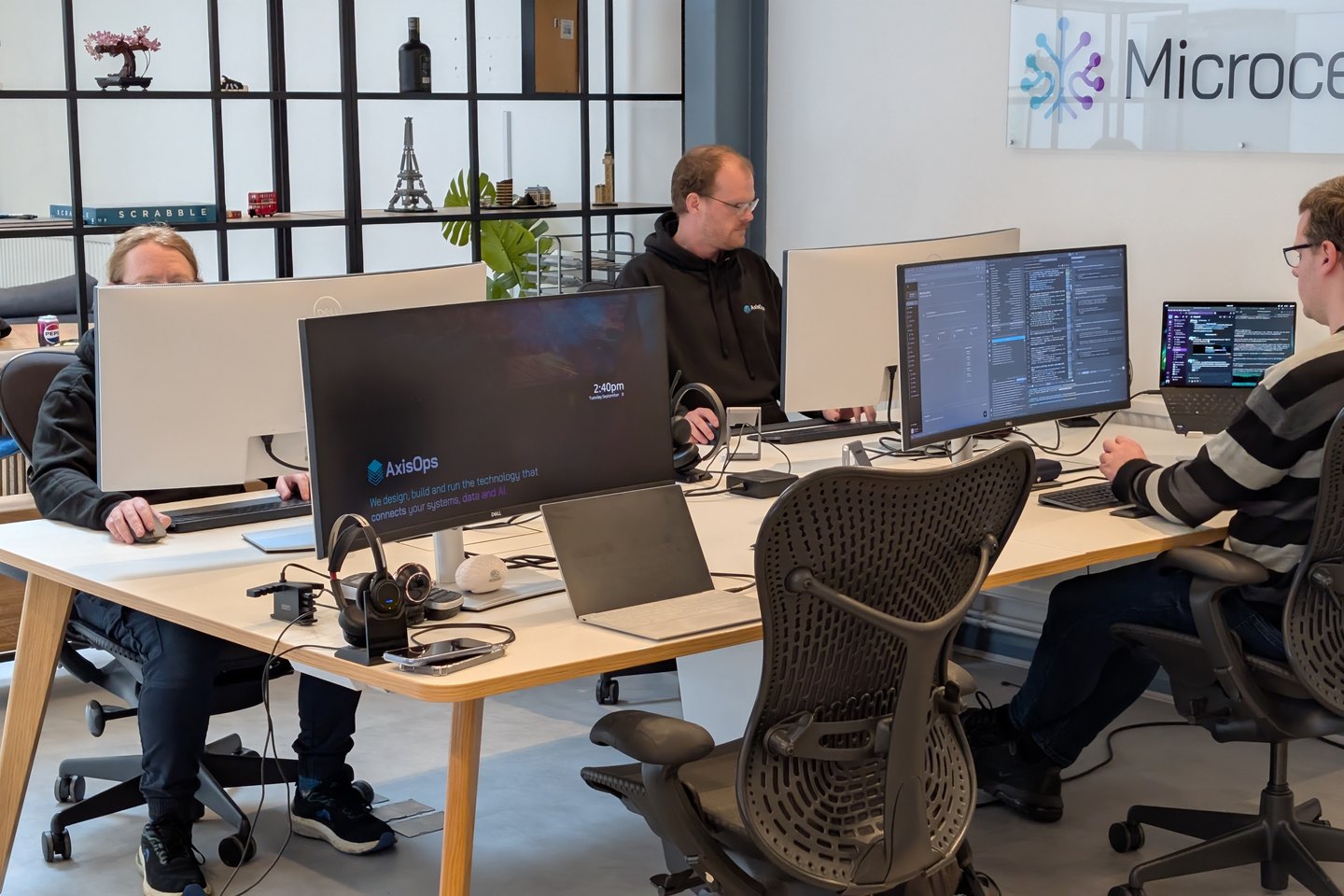
micro‑glue is not a side project and not a snapshot. It is the container factory inside Microcelium, maintained by the platform team at AxisOps, and it moves every week: every stack the team runs — its own and its customers’ — is rendered by it. The history above is how it got here. What it does today is the current page.
Back to what it does today, or on to Substrate, the layer it belongs to.